www.versiti.org
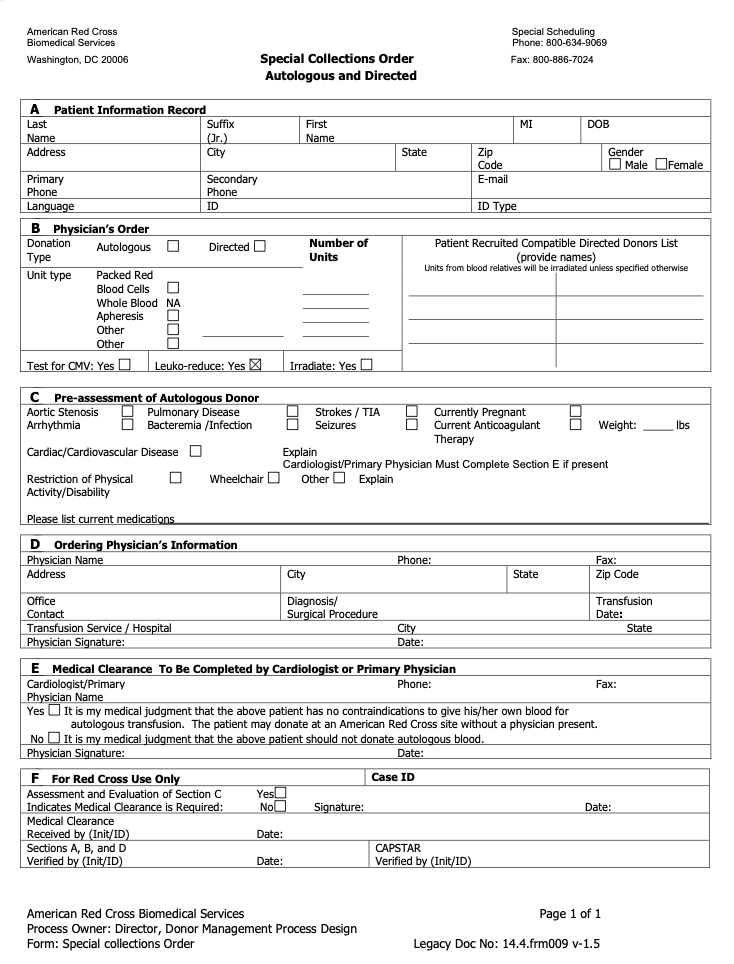
Directed Donation Program Information:
Before choosing to participate in this program, the patient and physician should consider the community blood supply, which is exceptionally safe. Blood banking authorities have found that the transfusion of blood from directed donors does not reduce the risks associated with transfusions. The safety of the blood relies, in part, on the truthfulness of each donor. Should family members and friends feel undue pressure to donate, they may fail to be truthful about their eligibility as blood donors.
Requesting Directed Donor Units:
The request must be made by the patient’s physician. As soon as possible after the decision for surgery is made, the Directed Donation Order Form should be completed with the patient’s information and sent to Versiti. Once the patient’s order is received, donors may call Special Patient Services at 800-525-1388 to make an appointment. It is advisable to recruit more donors than the number recommended by the physician, as some donated units may not be suitable for the patient’s use.
It is NOT recommended that a female patient of childbearing age receive blood from a husband or male partner, as their blood may cause immunization of the patient and therefore compromise future pregnancies. It is NOT recommended that a female donate blood to her biological child, as antibodies that may have been produced during pregnancy could cause a reaction during transfusion. Also, it is NOT recommended to have directed units if the patient has red cell antibodies in their blood.
Directed donors must meet the same blood donor eligibility criteria as any person donating for the general blood supply.
Availability of Directed Donor Units:
After collection, these units are subjected to the same tests as other donated blood. If, for any reason, a unit is not suitable for transfusion, it is discarded. Donors are informed of abnormal test results only when all tests are completed, which may be later than the patient’s transfusion date. (Note: To protect the confidentiality rights of the donor, neither the patient nor the patient’s physician is notified of non-suitable units.) All ABO-compatible units matching the order are tagged, reserving them for the patient’s use.
Hospitals will be notified only of drawn units not available for the patient’s transfusion. At the hospital, the donated blood will be crossmatched with a sample of the patient’s blood. Only crossmatch-compatible units will be held for the patient’s surgery.
Other reasons for which the blood may not be available for the patient’s surgery include but are not limited to: breakage of the plastic container, inadvertent contamination of the blood, or the need for repeat or additional testing. For these and other reasons beyond its control, Versiti cannot ensure that directed donor units will be available. In such circumstances, the physician may decide to supplement with transfusion of blood from the community blood supply.
Charges for Directed Units:
Because this program is very involved and requires special handling, a surcharge is added to the blood processing fee charged to the hospital for each unit sent. Also, to standardize directed units and improve safety of the blood (such as prevention of a rare transfusion complication known as graft vs. host disease), all directed products from blood relatives will be irradiated. All products are leukoreduced.
Appointments:
Prospective donors must schedule appointments for directed donations at one of the following donor centers:
Illinois: Aurora, Tinley Park, Crystal Lake, DeKalb, Joliet, Winfield, Naperville and Highland
Indiana: all donor centers
Michigan: Grand Rapids, Kalamazoo, Saginaw, Traverse City, Livonia and Midland Dow Diamond
Ohio: Mill Run Center
Wisconsin: all donor centers
To allow ample time for collection, testing, processing and delivery to the hospital, donors must donate at least three, but not more than 12, working days (excluding Sundays and holidays) before the date of the patient’s surgery. For example, donations made on a Friday should be available for a surgery scheduled the following Tuesday.
www.versiti.org
Directed Donation Program Information:
Before choosing to participate in this program, the patient and physician should consider the community blood supply, which is exceptionally safe. Blood banking authorities have found that the transfusion of blood from directed donors does not reduce the risks associated with transfusions. The safety of the blood relies, in part, on the truthfulness of each donor. Should family members and friends feel undue pressure to donate, they may fail to be truthful about their eligibility as blood donors.
Requesting Directed Donor Units:
The request must be made by the patient’s physician. As soon as possible after the decision for surgery is made, the Directed Donation Order Form should be completed with the patient’s information and sent to Versiti. Once the patient’s order is received, donors may call Special Patient Services at 800-525-1388 to make an appointment. It is advisable to recruit more donors than the number recommended by the physician, as some donated units may not be suitable for the patient’s use.
It is NOT recommended that a female patient of childbearing age receive blood from a husband or male partner, as their blood may cause immunization of the patient and therefore compromise future pregnancies. It is NOT recommended that a female donate blood to her biological child, as antibodies that may have been produced during pregnancy could cause a reaction during transfusion. Also, it is NOT recommended to have directed units if the patient has red cell antibodies in their blood.
Directed donors must meet the same blood donor eligibility criteria as any person donating for the general blood supply.
Availability of Directed Donor Units:
After collection, these units are subjected to the same tests as other donated blood. If, for any reason, a unit is not suitable for transfusion, it is discarded. Donors are informed of abnormal test results only when all tests are completed, which may be later than the patient’s transfusion date. (Note: To protect the confidentiality rights of the donor, neither the patient nor the patient’s physician is notified of non-suitable units.) All ABO-compatible units matching the order are tagged, reserving them for the patient’s use.
Hospitals will be notified only of drawn units not available for the patient’s transfusion. At the hospital, the donated blood will be crossmatched with a sample of the patient’s blood. Only crossmatch-compatible units will be held for the patient’s surgery.
Other reasons for which the blood may not be available for the patient’s surgery include but are not limited to: breakage of the plastic container, inadvertent contamination of the blood, or the need for repeat or additional testing. For these and other reasons beyond its control, Versiti cannot ensure that directed donor units will be available. In such circumstances, the physician may decide to supplement with transfusion of blood from the community blood supply.
Charges for Directed Units:
Because this program is very involved and requires special handling, a surcharge is added to the blood processing fee charged to the hospital for each unit sent. Also, to standardize directed units and improve safety of the blood (such as prevention of a rare transfusion complication known as graft vs. host disease), all directed products from blood relatives will be irradiated. All products are leukoreduced.
Appointments:
Prospective donors must schedule appointments for directed donations at one of the following donor centers:
Illinois: Aurora, Tinley Park, Crystal Lake, DeKalb, Joliet, Winfield, Naperville and Highland
Indiana: all donor centers
Michigan: Grand Rapids, Kalamazoo, Saginaw, Traverse City, Livonia and Midland Dow Diamond
Ohio: Mill Run Center
Wisconsin: all donor centers
To allow ample time for collection, testing, processing and delivery to the hospital, donors must donate at least three, but not more than 12, working days (excluding Sundays and holidays) before the date of the patient’s surgery. For example, donations made on a Friday should be available for a surgery scheduled the following Tuesday.


 Image 1 of 3
 Image 2 of 3
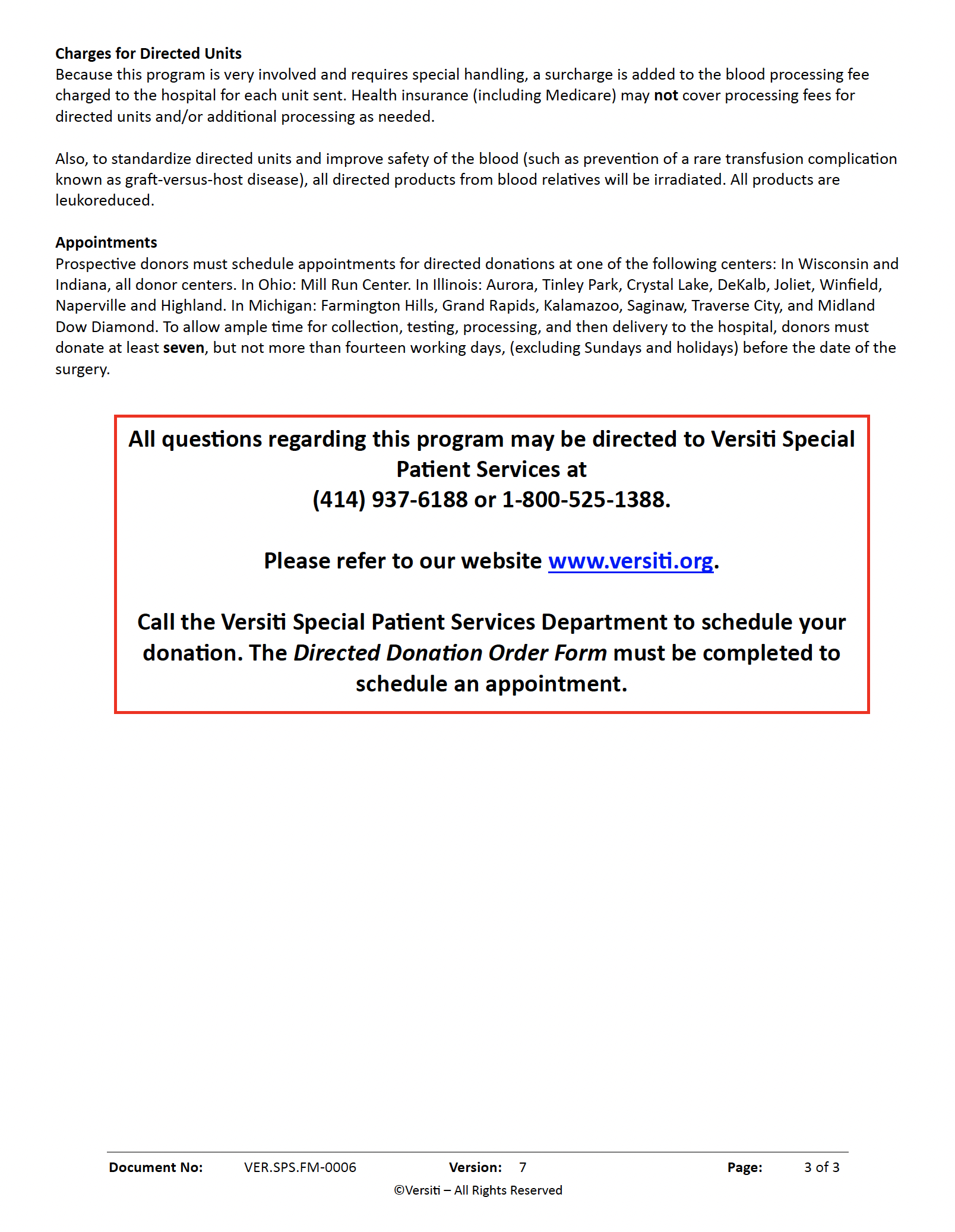 Image 3 of 3